
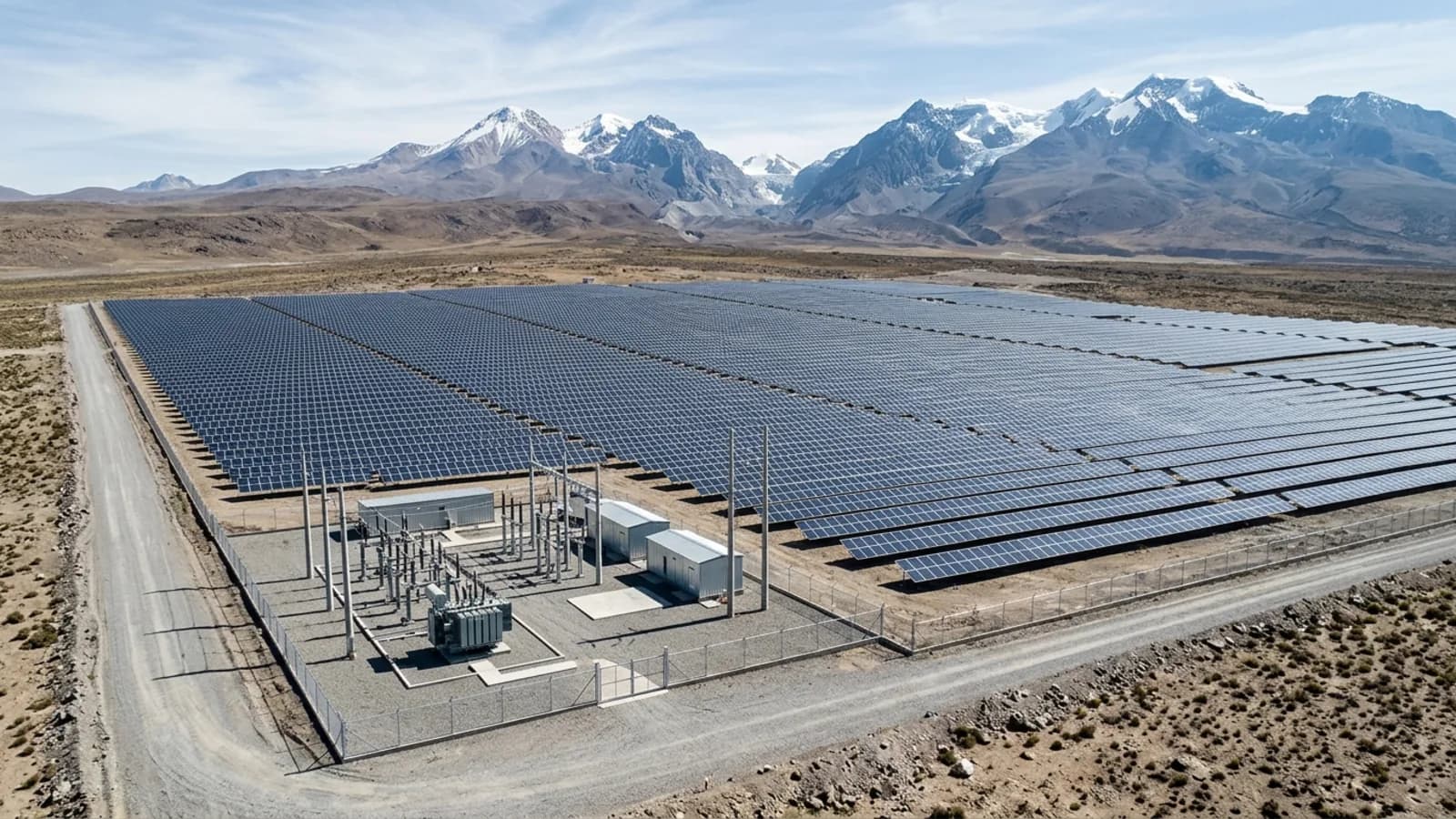
Solar projects in Ecuador are delayed by permitting far more often than by equipment. Not because the procedures are unusually long, but because they run on four separate fronts, before different authorities, and each one depends on documents produced by another. Sequencing them at the start saves months; discovering them along the way costs exactly that.
This is a map of those four fronts for a developer, an EPC contractor or a foreign investor assessing a project in the country. It does not replace advice on each individual procedure: it tells you what to ask for, in what order and from whom.
Front 1 — Environmental
No activity that generates environmental impact operates lawfully in Ecuador without going through environmental regularisation. The Organic Environmental Code defines three levels of authorisation according to the impact and risk of the project: an environmental certificate for non-significant impact, an environmental record for low impact, and an environmental licence for medium and high impact, whose studies must be prepared by environmental consultants registered with the competent authority.
Which level applies to a specific solar project is not a matter of judgement: it is determined when the project is registered in the SUIA — Ecuador's single environmental information system — under the categorisation catalogue in force, considering capacity, footprint, location and the sensitivity of the surroundings. Cost, studies and timeline all hang from that result, so it is the first thing to establish and the last thing to assume.
Where the process escalates to a licence, two elements deserve early attention: public participation, which has its own calendar and cannot be compressed, and the environmental management plan, which stops being an annex and becomes the document that later compliance audits verify.
Front 2 — Electrical
For self-supply projects — a company generating for its own consumption — the path is set by Regulation No. ARCONEL-005/24 (Codified), approved by the Board on 27 October 2024, which replaced the earlier net-metering framework. It has two milestones: the Connection Feasibility for Self-Supply and the Qualification Certificate.
The clock that has cost the most projects: from the notification of the feasibility, the developer has six months to start the qualification certificate procedure. Miss it and the feasibility is revoked, and the process starts over. The certificate file requires a technical report with the system sizing and single-line diagram, the design of any works on the distribution network, the connection, sectioning and protection scheme, and an execution schedule.
Two sizing rules constrain the design from the outset. Annual energy production must be equal to or lower than the annual demand of the associated regulated consumers. And nominal capacity is capped: where energy is injected, by the capacity of the connection point approved by the utility; where it is not, by the consumer's maximum recorded demand, with protection and control equipment that prevents injection.
One commercial point worth stating plainly to any investor: surpluses are not paid in cash. They create an energy credit in kWh, debited in later months, and the accumulated balance resets to zero every 24 months without financial compensation. Fixed charges continue as well — commercialisation every month, and the demand charge for consumers on a demand tariff, calculated on the maximum demand drawn from the grid.
Front 3 — Land and property
- Land use. The municipality determines whether the use is compatible with that specific plot. It is a local requirement, it varies between cantons, and it should be confirmed before closing the purchase or lease.
- Title. The electrical regulation requires a document evidencing ownership or lawful possession, or a notarised lease, bailment or antichresis contract, or the owner's authorisation. Disorderly documentation stops the procedure.
- Easements and access. The connection line and the construction access usually cross third-party land; those agreements are negotiated beforehand, not during assembly.
- Construction and fire-safety permits, where civil works or buildings are involved.
Front 4 — Construction health and safety
Construction is the project's highest-exposure stage, and it is governed by the same framework as any other worksite in the country: Executive Decree 255 and the Ministry of Labour's rules. What must be resolved before the first worker enters the site:
- A safety and health officer appropriate to the headcount and the risk level of the activity.
- The registered preventive document — internal health and safety rules or an integral prevention plan, as applicable.
- Procedures for high-risk work: work at height on structures and roofs, and electrical work during connection.
- Occupational medical examinations and health surveillance for site personnel.
- Coordination between contractors sharing the site, which is the usual source of construction accidents.
This front is underestimated because it blocks no permit: it blocks the work, which is worse. In a financed project, a serious incident stops disbursements.
Tax incentive, stated precisely
Ecuador's Internal Tax Regime Law allows depreciation and amortisation of machinery, equipment and technology used for distributed generation for self-supply from non-conventional renewable sources to be deducted with an additional 100 %. Three qualifications change the number, and all three belong in a financial model:
- It is a deduction, not a tax credit: it reduces the taxable base, so the cash benefit is the deduction multiplied by the applicable income-tax rate.
- It follows the pace of depreciation, not the year of purchase.
- The additional expense may not exceed 5 % of total revenue, it requires authorisation from the competent authority, and it does not apply where the acquisition is needed to meet an environmental requirement or a licence condition.
The four fronts at a glance
| Front | Before whom | What it produces | What it blocks if delayed |
|---|---|---|---|
| 1. Environmental | Environmental authority, through the SUIA platform | Environmental certificate (non-significant impact), record (low impact) or licence (medium and high impact), with its management plan | Lawful operation. Where a licence applies, public participation has its own calendar and cannot be compressed |
| 2. Electrical | Distribution utility, under Regulation ARCONEL-005/24 (Codified) | Connection Feasibility for Self-Supply and Qualification Certificate | Grid connection. Six months from the feasibility notification to start the certificate procedure, or the feasibility is revoked |
| 3. Land and property | Municipality, notary, third parties | Compatible land use, title or lawful possession, easements and access, construction and fire-safety permits | Everything else: without land and land use, the other three fronts may come to nothing |
| 4. Construction health and safety | Ministry of Labour, under Executive Decree 255 | Safety and health officer, registered preventive document, high-risk work procedures, medical examinations, contractor coordination | No permit — it blocks the work, and in a financed project a serious incident stops disbursements |
The cross-dependency worth recognising early: the information in the electrical file — location, footprint, module layout — is the same information that supports the environmental procedure. Produce it once, properly, and it serves both.
A sequence that works
- Land and land use. Without those, everything else may come to nothing.
- Environmental categorisation in the SUIA: it defines cost, studies and calendar.
- Connection feasibility with the distribution utility, in parallel with the environmental studies.
- Technical file — report, single-line diagram, protections, schedule — which feeds both the qualification certificate and the environmental procedure.
- Construction compliance resolved before mobilising personnel.
- Operation: management plan in execution, audits where applicable, and the annual energy report if the company falls within the large energy consumer category.
Frequently asked questions
Does every solar project in Ecuador need an environmental licence?
Not necessarily. Ecuador's Organic Environmental Code sets three levels of authorisation — environmental certificate for non-significant impact, environmental record for low impact and environmental licence for medium and high impact. Which one applies is determined when the project is registered in the SUIA platform, based on the current categorisation catalogue and the characteristics of the installation.
Can construction start once the connection feasibility is granted?
No. The feasibility allows the developer to continue the process; the next milestone is the qualification certificate, which must be requested within six months of the feasibility notification. Building before that means accepting the risk of having to modify what is already installed.
Are export surpluses paid in Ecuador?
Not in cash. Under Regulation ARCONEL-005/24 (Codified) surpluses create an energy credit in kWh that is debited in later months, and the accumulated balance resets to zero every 24 months with no financial compensation from the distribution utility.